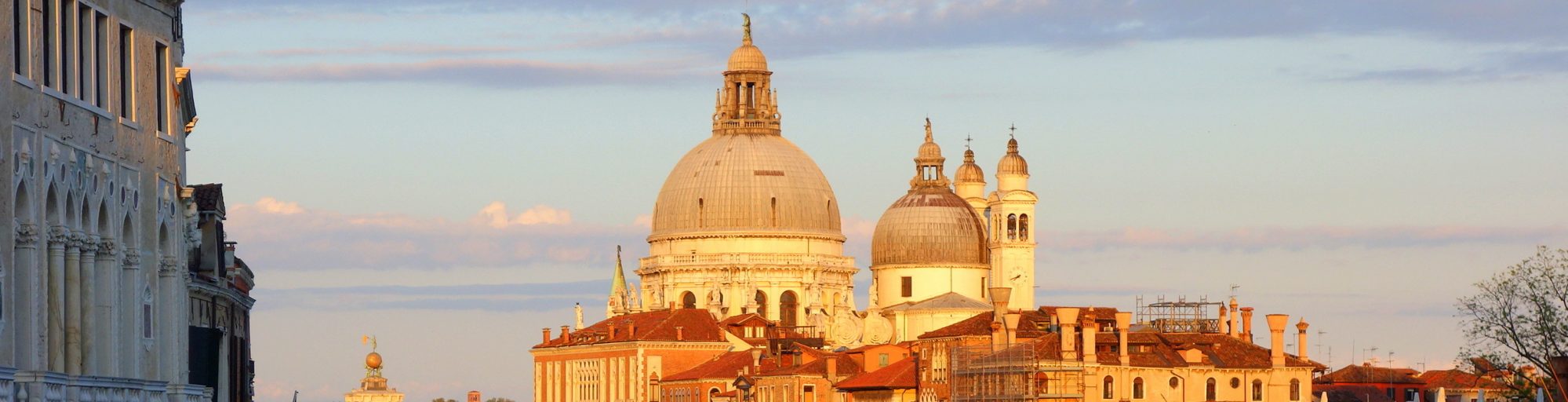
Shore excursions on a Mediterranean cruise in Spain, France, and Italy
From Barcelona to Rome, our Viking Iconic Western Mediterranean cruise included new destinations as well as those we have visited in the past. For new places, we opted for included highlight excursions to get an introduction, while in familiar places, we chose activities (optional excursions and/or time on our own) to get new perspectives.
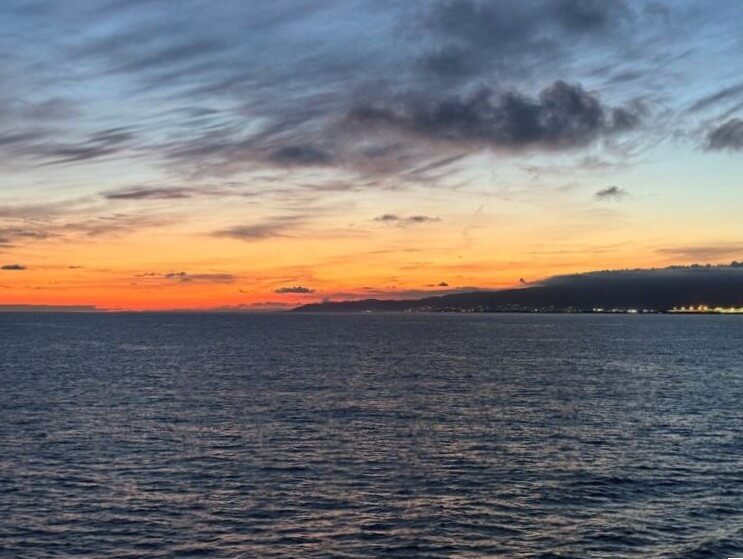
Sunset on the Mediterranean — on the Viking Mars leaving Barcelona, Spain and heading to France
In addition to a summary of our destination choices, I’ve listed some of the other shore excursions that were offered on this cruise that may fit your personal interests.
Port: Barcelona, Spain
Barcelona is the Catalonian capital located on Spain’s Mediterranean coast. While rich in history, it has a very contemporary and cosmopolitan vibe. There is also a strong design culture in the city that is showcased in its architecture, art, decor, and local products. — Capturing the Essence of Catalonia on a Mediterranean Journey on TWS
Shops of Las Rambas

Our optional excursion choice: The Picturesque Town of Sitges – 4.5 hours
Since we had previously explored the city of Barcelona, we chose an optional excursion to Sitges, a popular seaside town about 20 miles south of the city. Our time was well-spent on a guided walking tour followed by a pleasant lunch at a tapas restaurant at the waterfront.
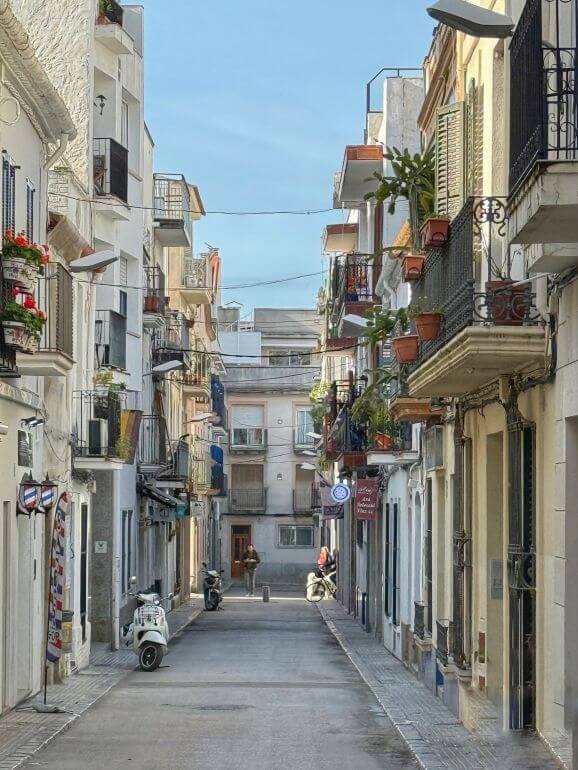
Sitges, Spain
The city center has a lot of character and it was interesting to walk along the narrow streets between buildings of Modernisme design. We also enjoyed a pretty walk on the edge of the city by the iconic Church of Sant Bartolomeu and Santa Teclain (shown below) overlooking the Mediterranean.
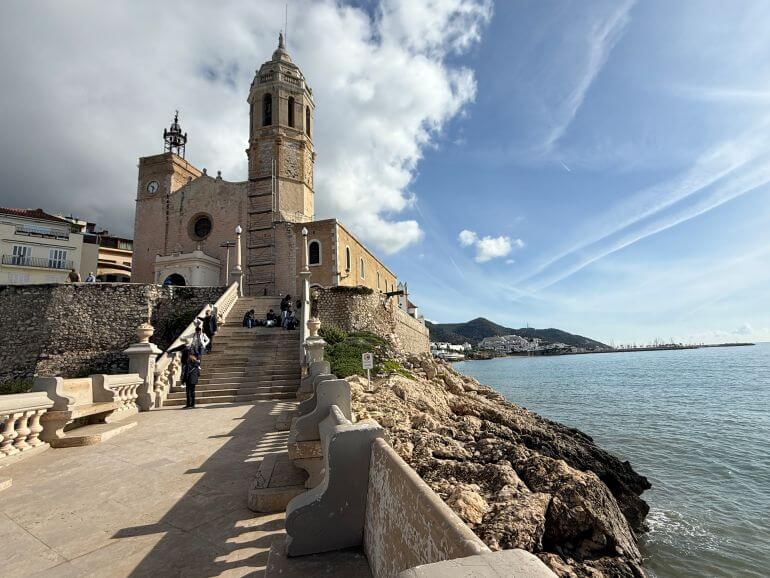
Church of Sant Bartolomeu and Santa Teclain in Sitges, Spain
The population of Sitges is about 32,000 but grows to over 100,000 during the summer because of its many beaches (including a series of them near the city center) and festivals. Sitges is a welcoming town and is known for its strong LGBTQ+ community. It is also known for its Carnival celebrated annually for over a hundred years and the Sitges Film Festival (every October since 1968) focusing on fantasy and horror genres.
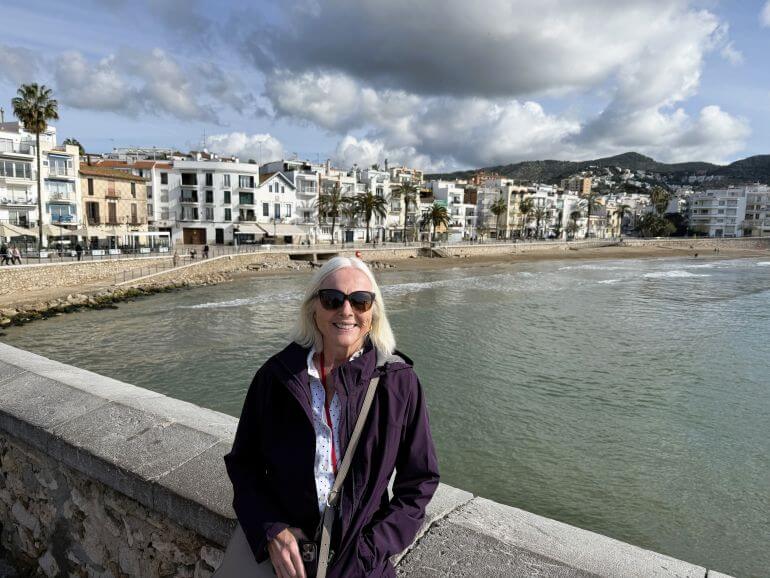
Sitges, Spain
Our walk took us along the palm-lined promenade connecting several of the city’s 17 beaches. The vibrant riviera ambiance as well as expensive property prices along the waterfront contributes to the Sitges being known as the Saint-Tropez of Spain. Across the street from the promenade was the restaurant where we sat outside while enjoying three courses of tapas and drinks.
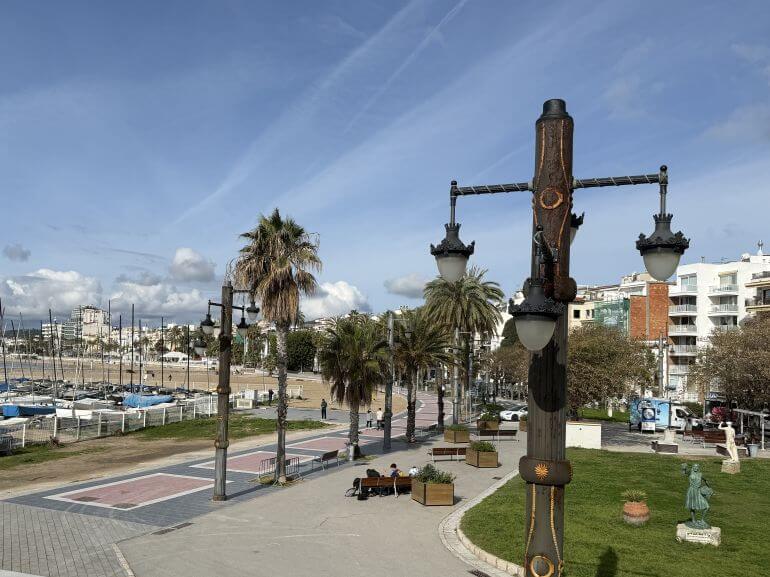
Palm-lined promenade along the coast in Sitges, Spain
Included and optional excursion tips: The Iconic Barcelona tour was an included excursion. A few examples of other optional excursions featured architectural landmarks of Gaudi (such as La Sagrada Familia) and Casa Batlló (shown below) on “The Block of Discord”, a tour of the Gothic Quarter, and a visit of Santa Maria de Montserrat Abbey.
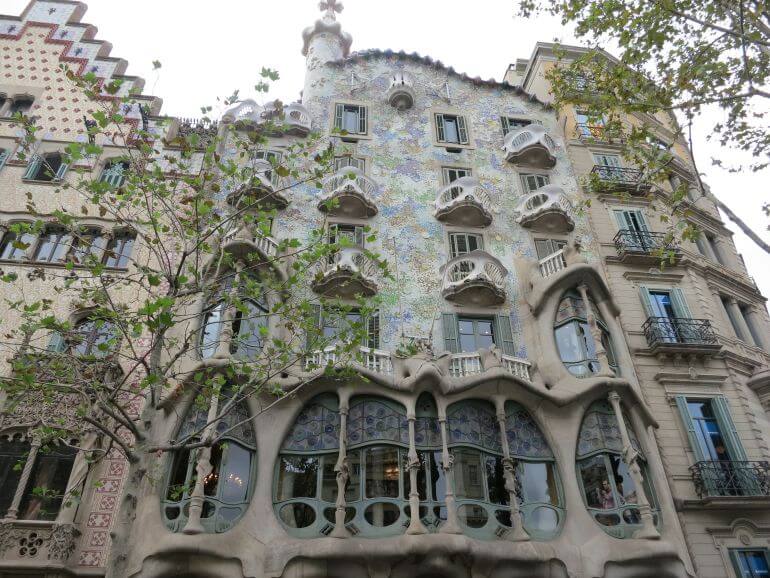
Antoni Gaudi’s Casa Batlló in Barcelona, Spain
Port: Sète, France
Our included excursion choice: Scenic Sète by Foot – 2 hours (plus free time on our own)
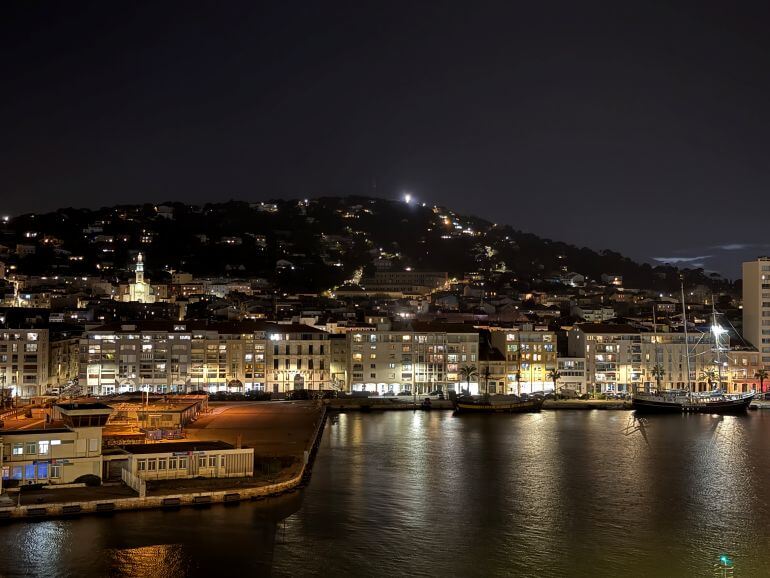
Port of Sète, France at night
Sète is a major port city in the southeast French region of Occitanie. It is known as the “Venice of the Languedoc” for its canal network. It’s not quite as pretty a city as others along the French Mediterranean coast partly because it is one of the largest fishing ports on the Mediterranean. Of course, the weather was quite overcast the day we visited which may have added to the somewhat gritty look. We heard there is also a nearby resort area with many sandy beaches that makes Sète a popular vacation area during summer months. This combination of active fishing port and resort area contribute to a distinctive inviting character.
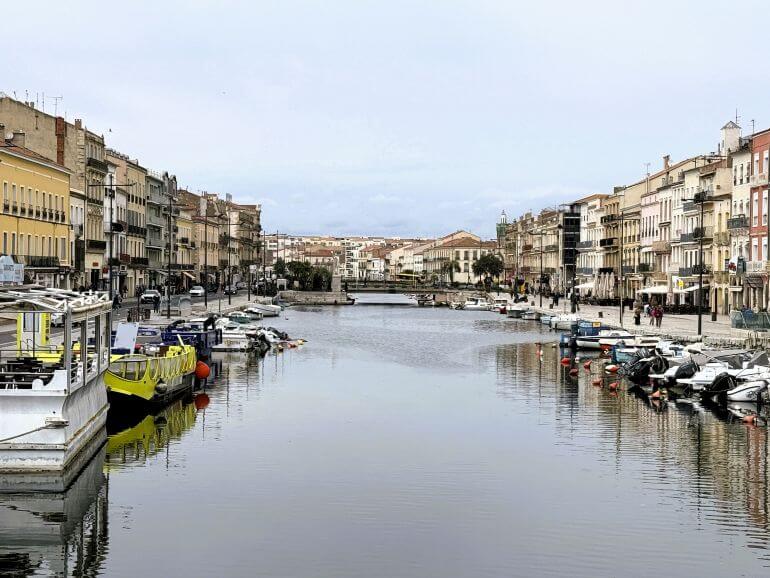
Buildings line a canal of the port city of Sète, France
Our excursion included a guided walking tour of the old city’s streets and squares past shops and restaurants along the canal and uphill through residential areas with art galleries and murals (shown below). If you’d like to get great city and sea views, go to the top of Mont St Clair.
Sète has several festivals during the year, including the weeklong Fête de la Saint-Louis (named for Sète’s patron saint) in August that features a water jousting tournament on the Royal Canal. In water jousting, participants with padded lances and shields propel toward each while standing above the prow of boats and attempting to knock their opponent into the water.
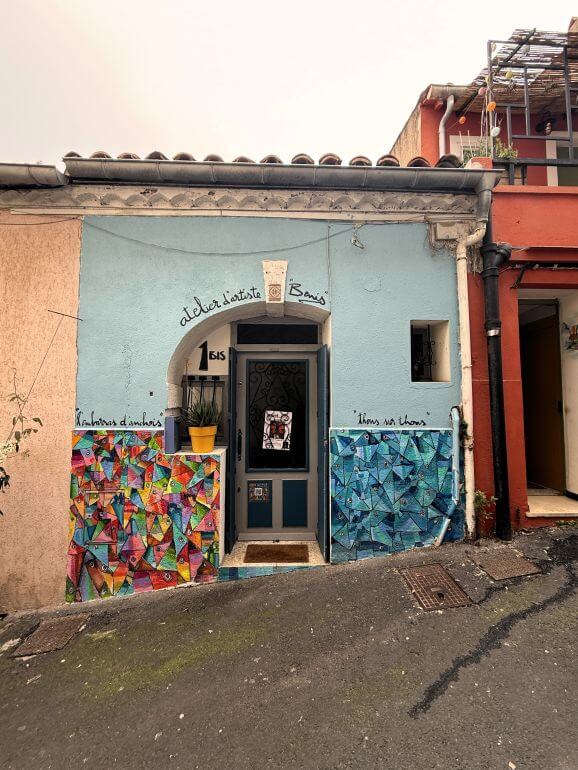
Colorful murals on the walls of an art gallery in Sète, France
We spent a little extra time in town before walking back to the port entrance to take a very short ride back to the ship.
Food tips: Many of the restaurants in Sète feature fresh seafood, and there is a distinct Italian influence due to the history of Neapolitan fisherman settling here in the 18th century. Traditional specialty foods like tielle, a spicy octopus pie, was introduced to Sète by Italian immigrants at the end of the 19th century. I was also tempted by cannoncini, Italian puff pastry cream-filled horns seen in a bakery’s window (below). Our guide treated us to another specialty of Sète, Les Zézettes de Sète which are tasty biscuits (made with flour, vanilla and a touch of rosé) influenced by Algerian recipes.
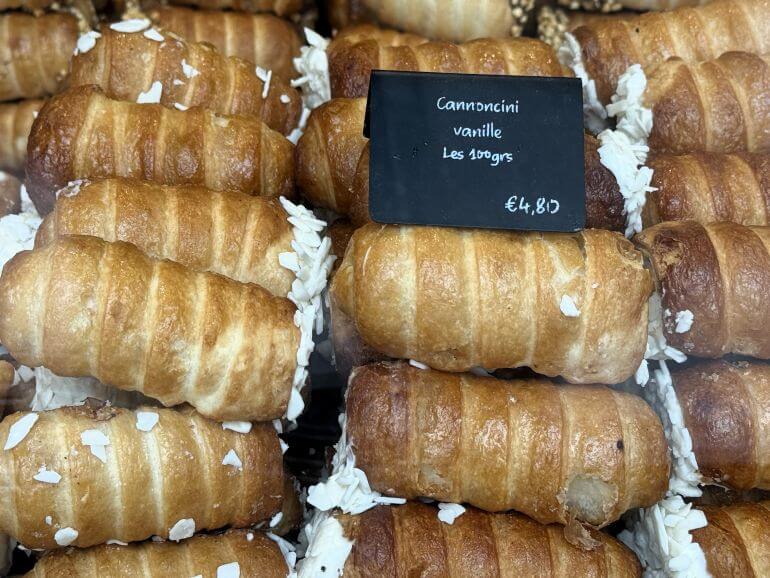
Italian pastries in Sète, France
Optional excursion tips: From the port at Sète, guests could also choose optional excursions to Carcassone, Narbonne & Fontfroide Abbey (shown below), Montpellier, a boat ride of L’Étang de Thau saltwater lagoon, and scenic drives in the countryside and villages.

Abbaye de Fontfroide
Port: Marseille, France
As someone who lives in Marseille told me, “Marseille is a way of life”. It’s the playing of pétanque (similar to bocce), the imbibing of pastis (an anise liqueur developed in Marseille as a substitute for the banned absinthe in 1915), the savoring of Bouillabaisse (for which Marseille is famous), and a certain joie de vivre. It is also a way of life that embraces the diversity of this melting pot on the Mediterranean and its rich culture, history, and art — giving an ample number of reasons for its designation as a 2013 European Capital of Culture. — Highlights of Marseille on TWS

Basilica of Notre Dame seen from the port in Marseille
Our optional excursion choice: Le Castellet & Wine Tasting – 5 hours
We love Marseille and have had the pleasure of visiting three times before, including once to experience the Christmas traditions of Provence. So we chose an optional excursion to the village of Le Castellet in the Provence-Alpes-Côte d’Azur region in Southeastern France, followed by a wine tasting and snack at a winery in the Bandol AOC.
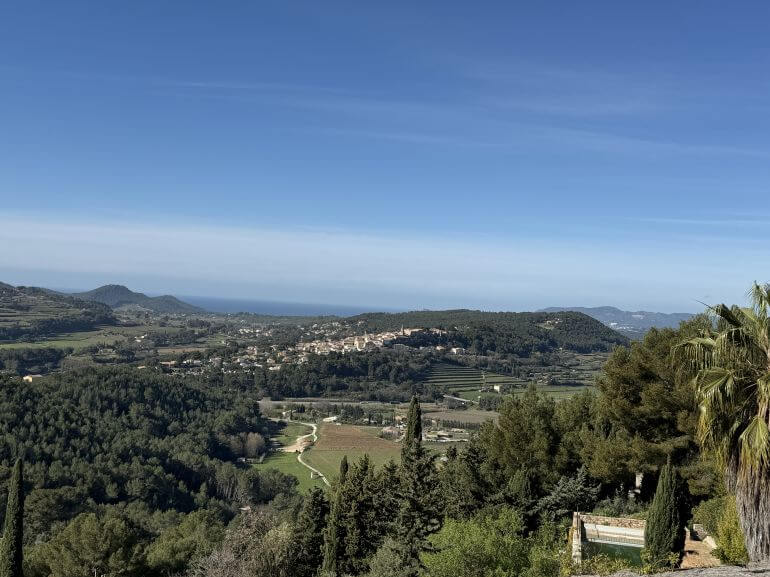
View of the valley and Mediterranean Sea in the distance from Le Castellet, France
In the morning, we took a coach from the ship through scenic countryside Le Castellet, a small medieval hilltop village of about 6,000 residents that was designated in 2022 as one of “The Most Beautiful Villages of France”. It’s a lovely place to walk around and take in the charming ambiance. It’s a popular place for tourists, but it was very quiet while we were there. We walked through the village and enjoyed views of the countryside from the top (shown above).
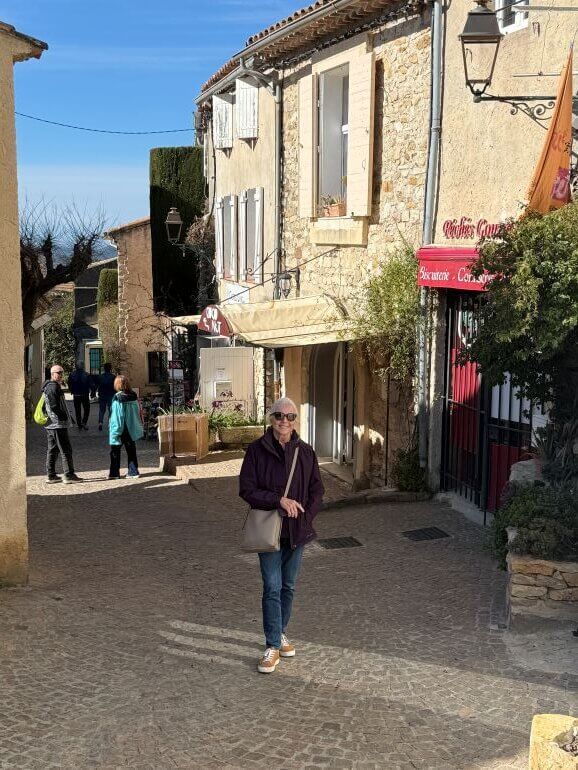
Le Castellet, France
In 1938, Marcel Pagnol’s La Femme du Boulanger (The Baker’s Wife) was filmed in Le Castellet and you can find several filming locations on the village’s tourism website.
With the recommendation of our local guide, we stopped at a delightful spot to enjoy a pastry, La Femme du Boulanger, which is named for the film. The croissant was delicious — Mr. TWS goes so far as to say it was the best he ever had.
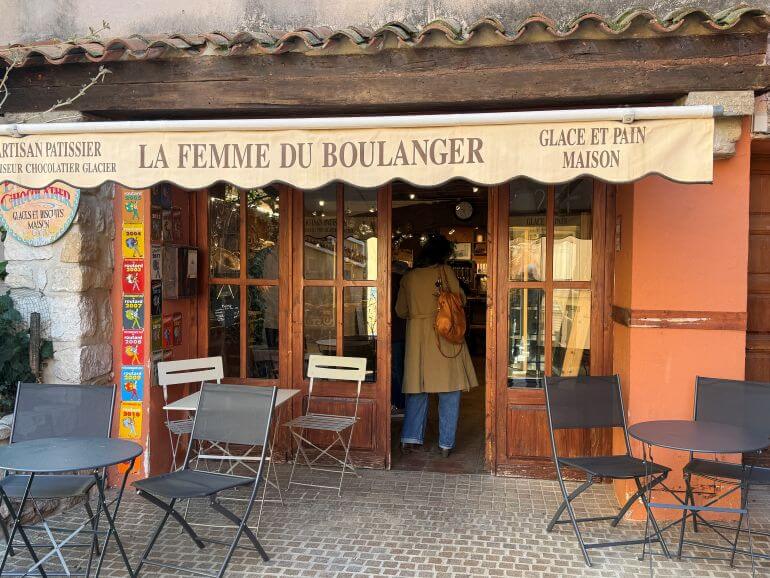
La Femme du Boulanger bakery in Le Castellet, France
A short drive (about 20 minutes) from Le Castellet through beautiful countryside and Bandol AOC vineyards is the family owned and operated Domaine de Frégate in Saint-Cyr-sur-Mer. Antonin and Rémy Thiollier (who manage the winery with their father, Jean-Sébastien) provided a very informative tour of the oak-barrel room, followed by a few tastes of their signature wines — a rosé, a white, and a red served with a snack of pizza.
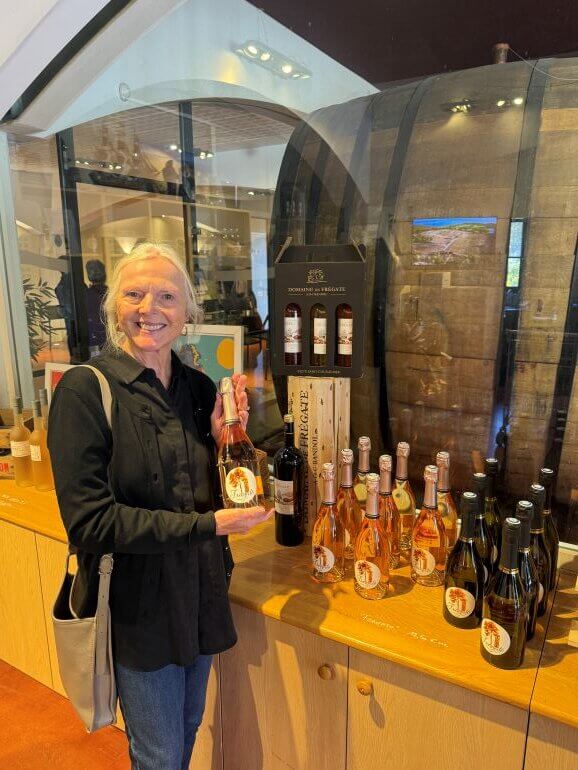
Domaine de Frégate in Saint-Cyr-sur-Mer, France
Adjacent to the winery amid the vineyards with views of the Mediterranean is the Le Frégate Provence golf and spa resort.
Then it was back to Marseille along a scenic route winding through the hills and provided vistas of the Mediterranean coast and seaside villages of La Ciotat and Cassis.
Included and optional excursion tips: Scenic Marseille, a coach tour of the city plus time on your own in the city center is included. Also included is a walking tour of the Panier District. Other optional excursions included visits to Cassis (we loved this seaside village on a previous trip shown below), Aix-en-Provence (if you haven’t been, this would also be an excellent choice), Avignon and the Palace of the Popes, and a motorcycle sidecar ride through Provence.
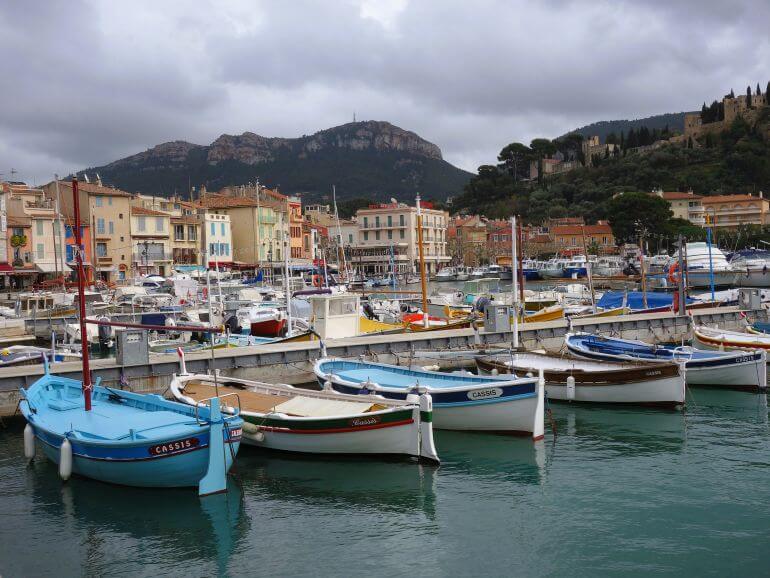
Cassis, France
Port: Villefranche-sur-Mer, France
Note:
Though we docked at Villefranche-sur-Mer, Viking ships with the same itinerary also dock at Monaco, but choices for the included and optional excursion are the same.
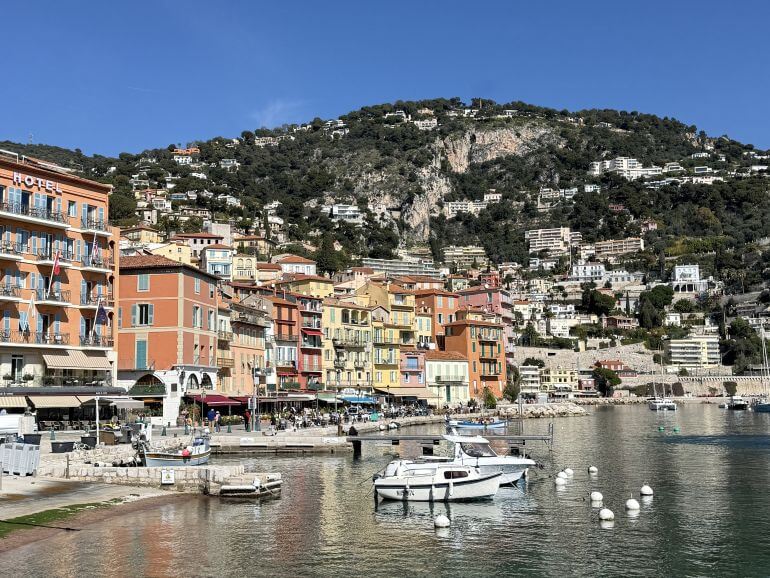
Villefranche-sur-Mer, France
Imagine the South of France. What comes to mind? Do you think of sea views and luxury beach resorts on the French Riviera or quaint villages of Provence and the historic port city of Marseille? Do you imagine taking in the fragrances of the sea and lavender fields? Perhaps you think about savoring traditional cuisine and fine wine on a terrace during a balmy evening. We enjoyed these and other sights, scents, and flavors during our exploration of the Mediterranean coast of France. Whatever you imagine, we found traveling in southern France was a treat for the senses. — Indulging the Senses on the Mediterranean Coast of France on TWS
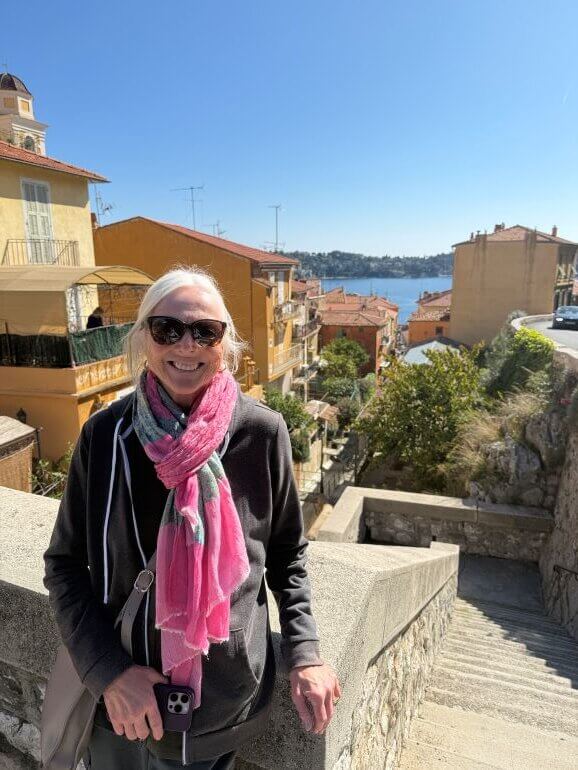
Villefranche-sur-Mer, France
Our excursion choice: Time on our own in Villefranche-sur-Mer
We chose to spend time on our own in this beautiful hillside coastal city. We took a short tender ride from our ship at anchor offshore. The city center is easily accessible from the dock. We first went inside La Chapelle Saint-Pierre (near the dock) which has been beautifully decorated by Jean Cocteau (photographs are not allowed inside). We walked around, up and down, the pedestrianized narrow streets past boutiques, bakeries, butcher shops, churches, small squares, and the beach. We also made a point to find rue Obscure, a hidden covered walkway used by the military sentries in the 14th century — shown below.
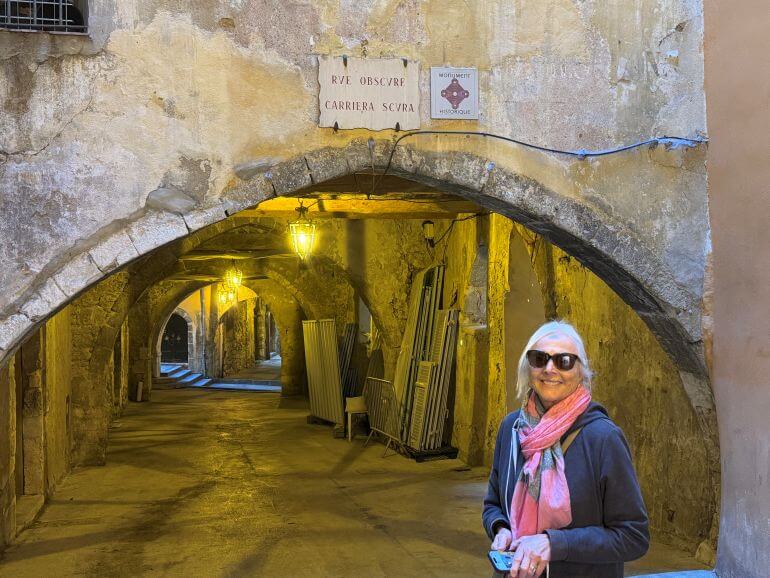
Rue Obscure in Villefranche-sur-Mer, France
Lunch at a popular quayside restaurant, La Mere Germaine, was delicious as we enjoyed the waterside views, giving us a feeling of joie d’vivre!
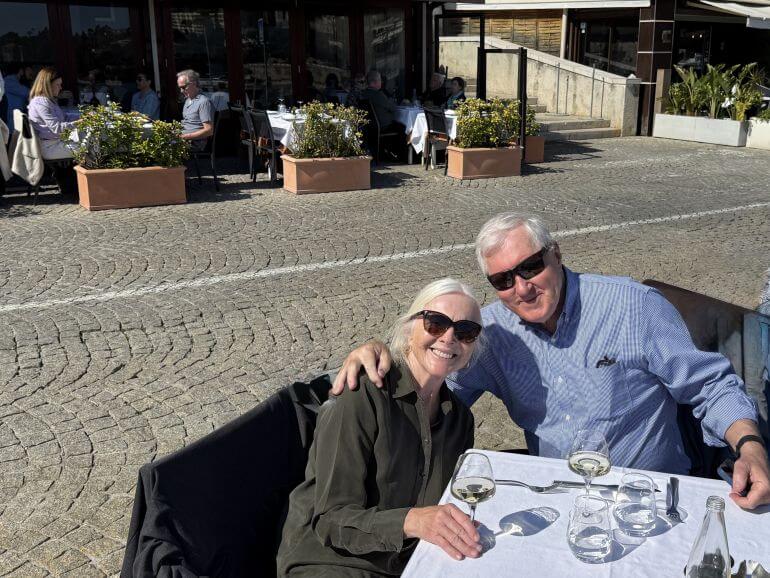
Lunch quayside at La Mere Germaine in Villefranche-sur-Mer, France
Other excursions tips: A walking tour of Monte Carlo was included. We took this tour when we were on the Mediterranean Odyssey cruise a few years ago. On that cruise, we were docked at Monte Carlo and could easily spend time on our own before going back to the ship. Additional optional excursions took guests to other parts of the French Riviera like Nice, Eze, Antibes, St. Paul de Vence, and a parfumery in Grasse.

Port of Monte Carlo
Port: Livorno (Florence/Pisa)
Livorno is the port for destinations in Tuscany, such as Florence, Pisa, and Lucca. We were at port in Livorno for two nights.
Our optional excursion choice (Day One): Lucca On Your Own – 4.5 hours
Lucca was bustling with locals and visitors on the Sunday afternoon we visited. But as we were walking around the medieval historic center, we came through this passageway and to a much quieter scene. I love the shades of yellow and pink on the buildings and other colorful touches. — A Week in Tuscany on TWS
That quote is from a post I wrote during our first visit, but the photo is from our latest visit. They’re nearly identical. I didn’t realize I’d been captivated by exactly the same scene. For me, it’s the essence of Lucca.
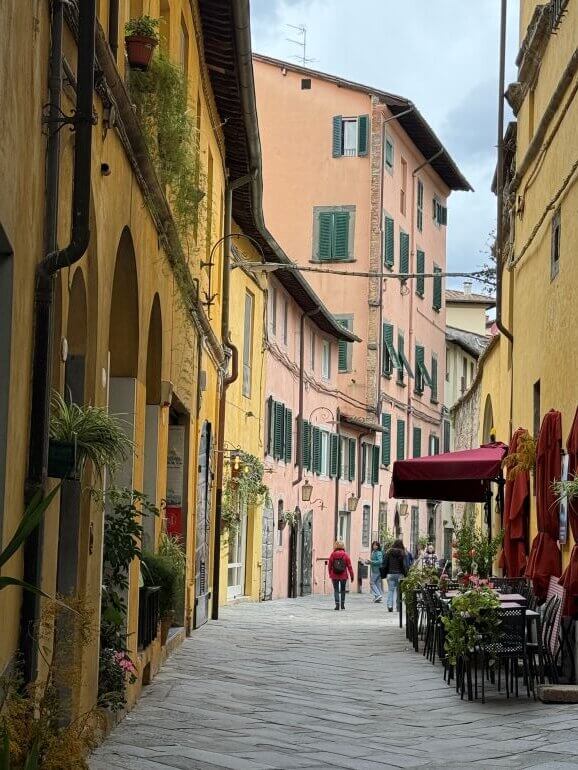
Lucca, Italy
The time in Lucca wasn’t totally on our own. We had a local guide who provided information about Lucca during the one-hour coach ride from the port of Livorno. She also guided us from the drop-off point to the Piazza San Michele which would serve as a good starting off point for our own exploration.
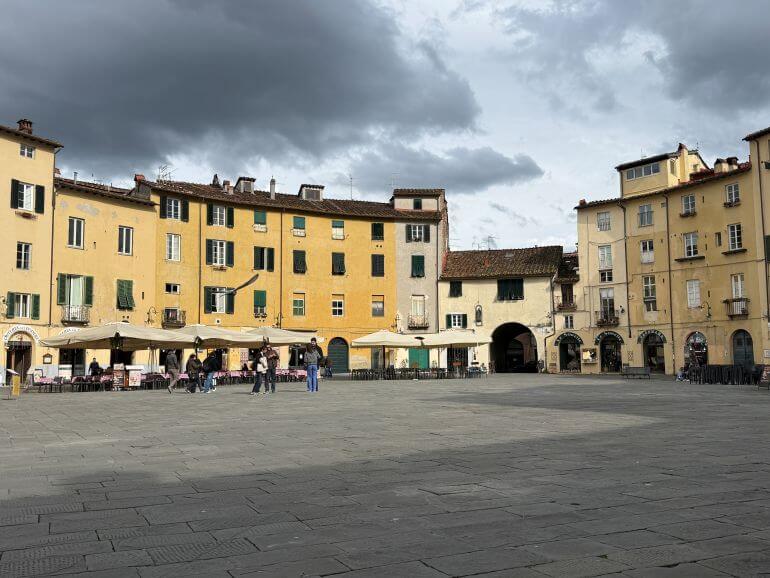
Piazza dell’Anfiteatro in Lucca, Italy
There are many restaurants, cafes and shops on the oval-shaped Piazza Anfiteatro (shown above), the site of an ancient Roman amphitheater. It’s a wonderful spot for people watching and relishing Lucca.
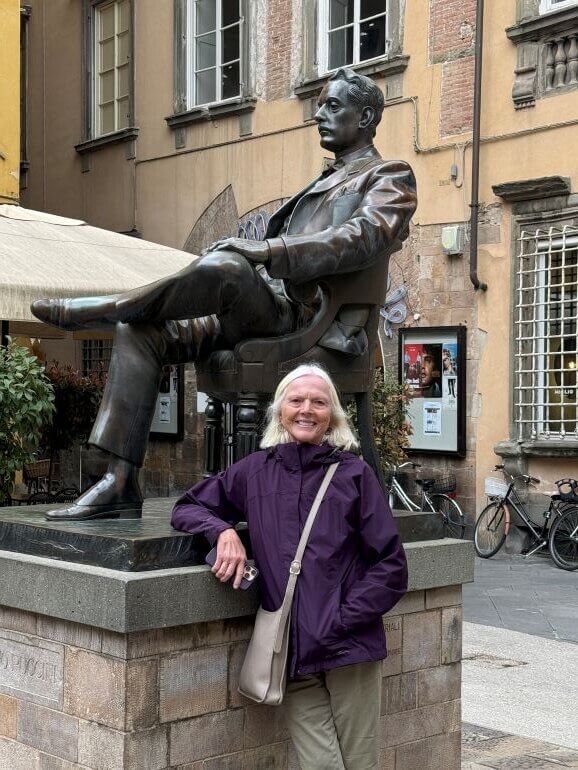
Puccini statue in Lucca, Italy
Among the familiar places we wanted to see again were the Piazza della Cittadella where Puccini’s birthplace, now a museum, is located. We had planned to visit the museum, but it was unexpectedly closed. We also enjoyed a walk on the old city walls and would recommend that activity if you go to Lucca. It’s also a nice place for a bike ride which we had done previously.
Our excursion choice (Day Two): Time on our own in Livorno
We had been told that Livorno didn’t offer many tourist activities, but that was fine with us on this trip. We wanted a chance to visit a new city in Tuscany (have been to other locations before) and a less-touristed one at that. Since we were docked at Livorno it was also very easy to get there by a shuttle that ran regularly between the city center and port.
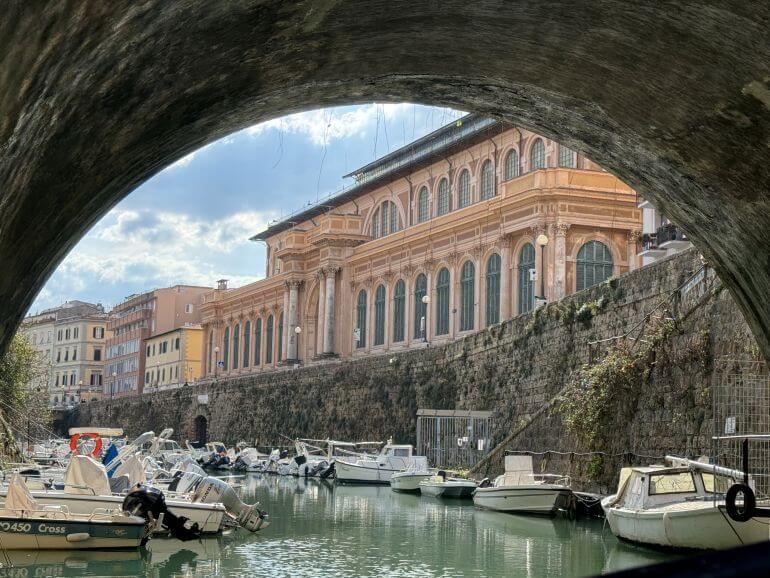
Going under a bridge on a canal boat tour of Livorno, Italy
We definitely recommend taking a canal boat tour with Livorno Sailing. The informative guide-narrated tour on a small boat is one hour long on the Medici canals that were built so that merchants could easily deliver their goods to the warehouses.
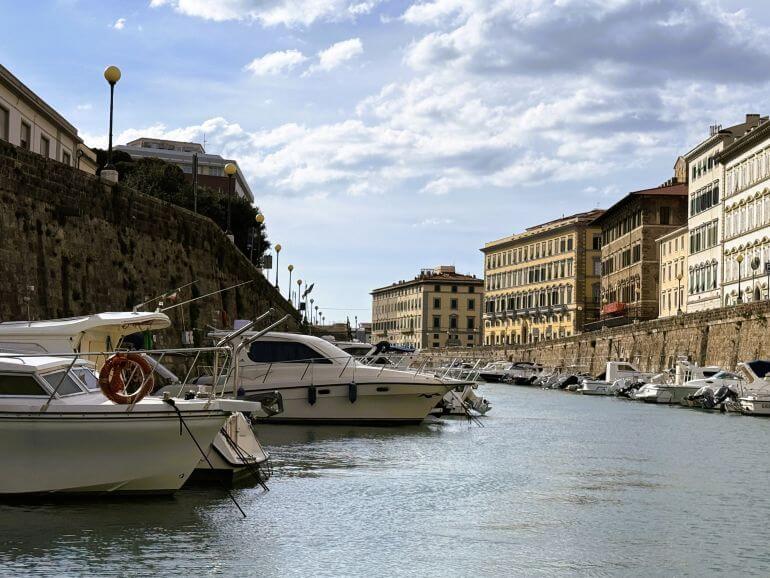
Livorno, Italy
Livorno was carpet-bombed in World War II so the city center has been largely rebuilt, but historic buildings still remain.
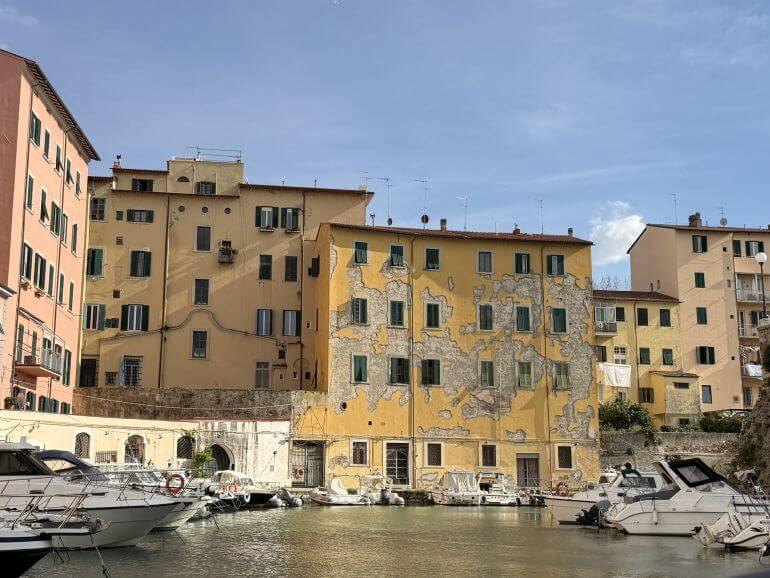
Livorno, Italy
The canal trip circled the two Renaissance fortresses of Livorno — Fortezza Vecchia (old fortress built in the 16th century – shown below) and the newer Fortezza Nuova (built decades later in the 17th century). The canal was built to connect the two. The Old fort contains the tower of its predecessor built in the 11th century and is described as a symbol of Medicean Livorno. The new fortress is a good addition to a walk of the Venice neighborhood, provides good views of the canals, and offers a relaxing park.
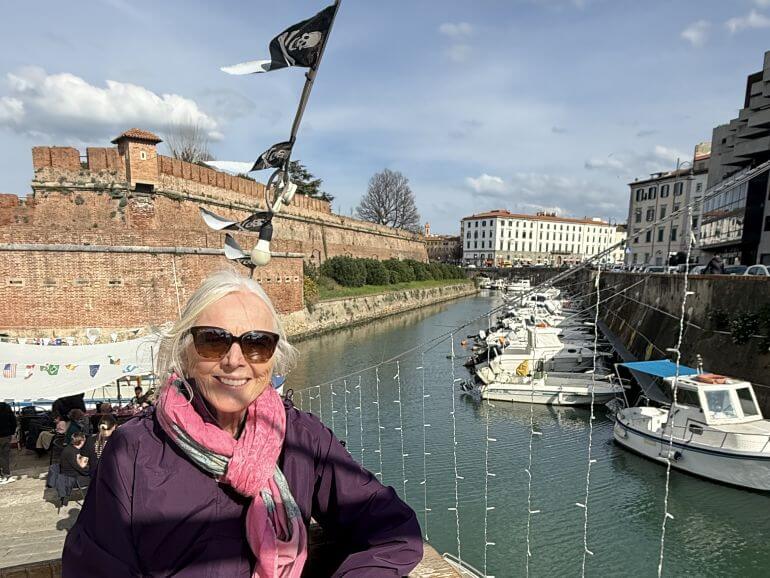
Old Fortress of Livorno on left side of the canal seen from the canal boat starting point
There’s a bar and restaurant at the starting point to have a drink or snack before your canal cruise.
Included and optional excursion tips: There are many great options for excursions while at port in Livorno besides Lucca and Livorno itself including tours of Florence, Pisa, San Gimignano, the Carrara Marble Quarry, Chianti wine region, and Cooking in a Tuscan castle, The same excursions are offered each day.

View of the Tuscan countryside from San Gimignano
Our Viking Iconic Western Mediterranean cruise ended at Civitavecchia (the port for Rome) where we disembarked to catch our flight home from Rome Fiumicino Leonardo da Vinci International Airport.
Onboard experience: Besides the destination shore excursions offered on a Viking cruise, there’s plenty of onboard activities to experience. We enjoyed many of the same experiences on past ocean cruises. For more information: Top Things to Do When You Take a Viking Ocean Cruise
Do you have favorite Mediterranean cruise shore excursions to recommend?